Google Ads management / Sarasota, Tampa Bay + remote
Google Ads is a trademark of Google LLC. No endorsement or partner status is implied.You paid for the click. Make the whole path earn it.
The clicks are coming, but the phone is quiet—or the leads are a weak fit and nobody can say where the path breaks. WebInk provides Sarasota PPC management that connects search intent, account structure, ads, landing pages, tracking, and lead-quality feedback so paid search produces better decisions, not another dashboard nobody trusts.
Bring an existing account or planned campaign. We start with the first constraint—not more spend. Google Ads management is quoted for the account, not sold as a fixed online package.
- Search intent
- Message match
- Useful tracking
- Lead feedback
-
01Query What is the buyer asking for?
-
02Ad Does the message answer that intent?
-
03Landing page Does the destination continue the promise?
-
04Inquiry Is the next action clear and measurable?
-
05Qualified conversation Did the click become a worthwhile sales conversation?
The account can optimize only what the business defines and measures. Lead-quality feedback closes the loop after the form or call.
Choose the useful starting point
Existing account or new campaign?
The first questions are different. The destination is the same: an accountable path from search intent to a better-informed sales decision.
Find where the current path is leaking.
Review campaign structure, search terms, conversion definitions, landing-page match, and the feedback available after an inquiry arrives.
- Which conversions are actually useful?
- Where does intent drift between query and page?
- What can the sales team tell us about lead fit?
Build the measurement and landing path before scaling spend.
Start with the offer, market, search intent, budget boundaries, destination, conversion actions, and follow-up process the campaign will depend on.
- Is the offer clear enough to advertise?
- Does the landing page answer the query?
- Can the business recognize a good inquiry?
Recognizable paid-search problems
The expensive part is not always the click.
A respectable-looking campaign can still attract the wrong searches, send people to a generic page, count weak actions as success, or lose the learning once a lead reaches the business.
Traffic arrives, but the search was never a strong fit.
Campaign structure, match behavior, search terms, and useful negatives should protect the offer from irrelevant demand.
The ad and landing page answer different questions.
The promise should continue after the click with clear service detail, proof, mobile usability, and an obvious next action.
The dashboard counts activity the business does not value.
Calls, forms, purchases, and other actions need clear definitions before they can guide budget or optimization decisions.
The account cannot learn which inquiries became worthwhile.
Qualitative feedback from the people handling leads can reveal patterns that clicks and form totals cannot explain alone.
One connected campaign system
Optimize the campaign and the destination together.
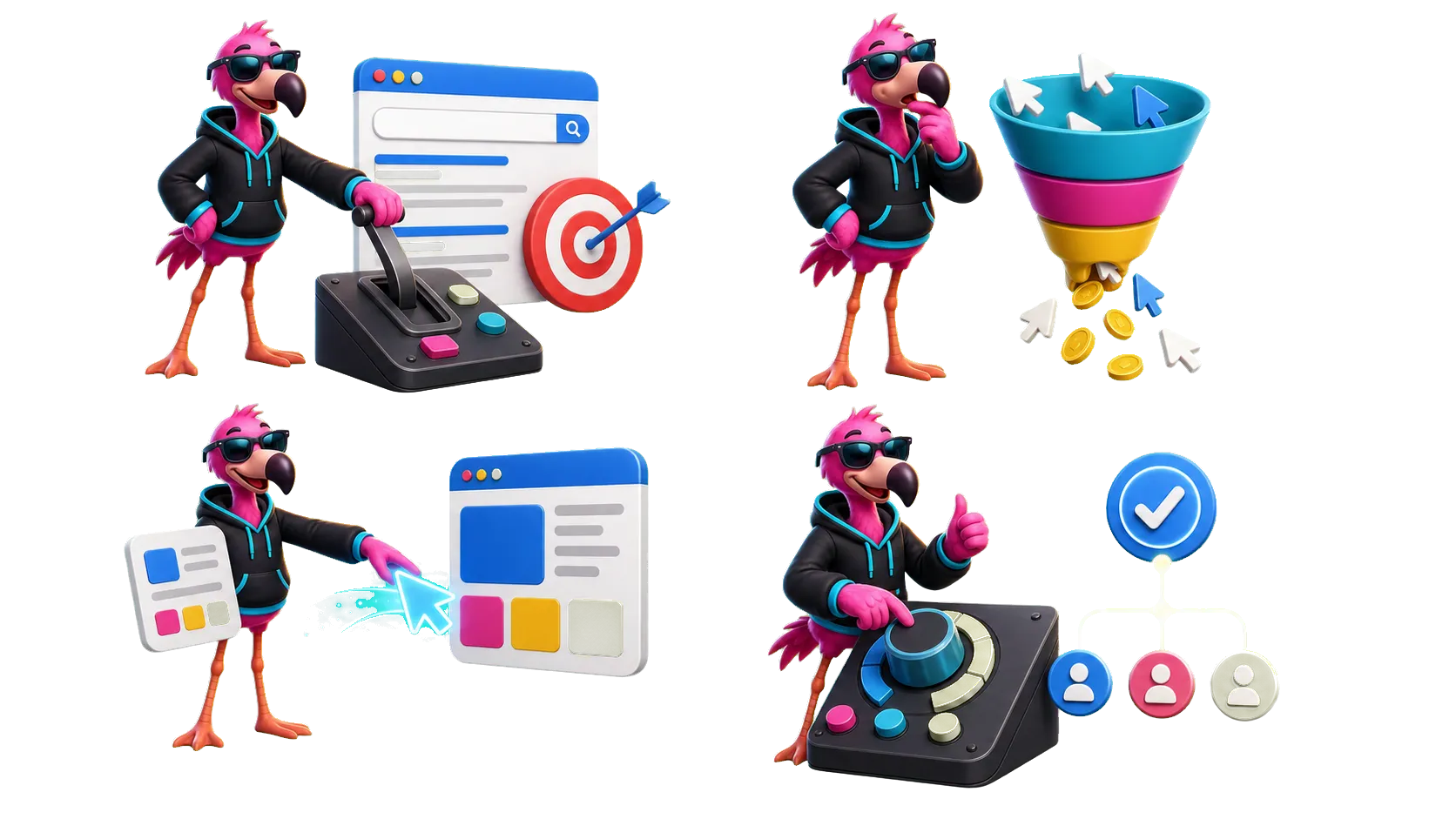
Paid search becomes more accountable when each decision can be traced from intent to ads and offers, through the landing experience, and into measurement the business can use.
-
01
Intent
Organize the account around actual services, markets, buyer questions, and searches the business should not pay for.
-
02
Ads + offers
Answer the query clearly, distinguish the business, and set an honest expectation the destination can continue.
-
03
Landing experience
Improve message match, proof, speed, mobile decisions, calls, forms, and what happens next.
-
04
Measurement + business impact
Use reliable account data and lead-quality feedback to decide what to change, what to pause, and what has earned the right to scale.
Campaign readiness
Know when to scale—and when to pause.
More spend is not the automatic answer. Sometimes the useful decision is to repair the offer, landing experience, tracking, or follow-up path before sending more traffic through it.
The business can turn paid intent into a measurable next step.
- A real service or offer has a defined market.
- The team can respond to inquiries and share lead-quality feedback.
- There is a usable landing destination—or willingness to improve it.
- Campaign decisions can follow evidence instead of activity alone.
The campaign would be asked to compensate for a broken path.
- The offer or ideal customer is still unclear.
- The website undersells the business or sends everyone to a generic page.
- Calls and forms cannot be measured reliably.
- No one can identify whether inquiries became worthwhile conversations.
Strengthen the page before scaling the campaign.
Web design and landing-page work can improve message match, proof, mobile decisions, and the action after the click.
Explore Web DesignConnect the inquiry to a more useful workflow.
Custom CRM and workflow planning can help when lead routing, status, ownership, or follow-up is slow and disconnected.
Explore Custom Apps + CRMAccount measurement review
Know what the account is buying before you decide what to change.
- Search termsIntent filters
- Ad groupsMessage match
- Landing pagesDecision path
- ConversionsSignal quality
- Lead feedbackSales context
What the review connects
- Which searches and campaigns are attracting relevant intent
- Whether the landing page matches the ad and the buyer’s question
- Which calls, forms, and actions are counted as conversions
- Where tracking gaps make performance difficult to judge
- How lead-quality feedback can improve keywords and spend decisions
Account access and customer details stay private. Findings are discussed with you in plain language, with tracking limits clearly identified.
Paid search leak finder
Where is paid traffic losing the sale?
Use the symptoms you can see. WebInk will suggest the first constraint to investigate before more spend.
3 quick questionsGoogle Ads questions
Set the expectations before the campaign sets the budget.
Can WebInk work with an existing Google Ads account?
Yes. The useful starting point is a scoped review of account structure, search intent, conversion setup, landing pages, and the lead feedback the business can provide. Recommendations should follow what the account and tracking can actually show.
Do I need a new landing page before running ads?
Not always. The current page may be usable if it clearly matches the offer, answers the searcher's question, works well on mobile, provides credible proof, and makes the next action easy. If it does not, fixing the destination may need to come before increasing spend.
How should Google Ads performance be measured?
Measurement starts with clearly defined conversion actions and accurate tracking. Platform activity becomes more useful when it can be compared with calls, forms, purchases, and qualitative feedback about which inquiries were actually a fit.
How is Google Ads management billed?
It is quoted rather than sold as a fixed-price package online. Monthly invoicing follows the agreed ad-spend level and WebInk management fee, which means the amount can change when spend changes. You will understand the calculation before campaigns launch.
Can Google Ads work alongside SEO?
Yes. Ads can test demand and messaging while SEO builds broader visibility over time. Both are stronger when they share useful landing pages, accurate measurement, and a clear understanding of the buyer's intent.
Does WebInk only manage campaigns in Sarasota?
No. WebInk is Sarasota-rooted and works with businesses across Tampa Bay and remotely. Campaign geography should reflect where the business can genuinely serve customers.
Make the next click more accountable
Find the weak link before putting more money through it.
Bring WebInk the current account or the campaign you want to launch. We will start with the intent, destination, measurement, and follow-up path the spend depends on.